|
Faiz Aladin I'm an Electrical Engineering Master's student at University of Southern California, where I am co-advised by Daniel Seita and Lars Lindemann. Previously I studied at Connecticut College where I received my Bachelor's degree in Computer Science, and was advised by Gary B. Parker. |

|
ResearchMy research focuses on the intersection of safe autonomy in robotics, leveraging latent space dynamics and computer-vision models to predict failure modes in high-dimensional systems. I am interested in studying safety analysis for robot manipulators by developing safety filters for pre-defined controllers. |
|
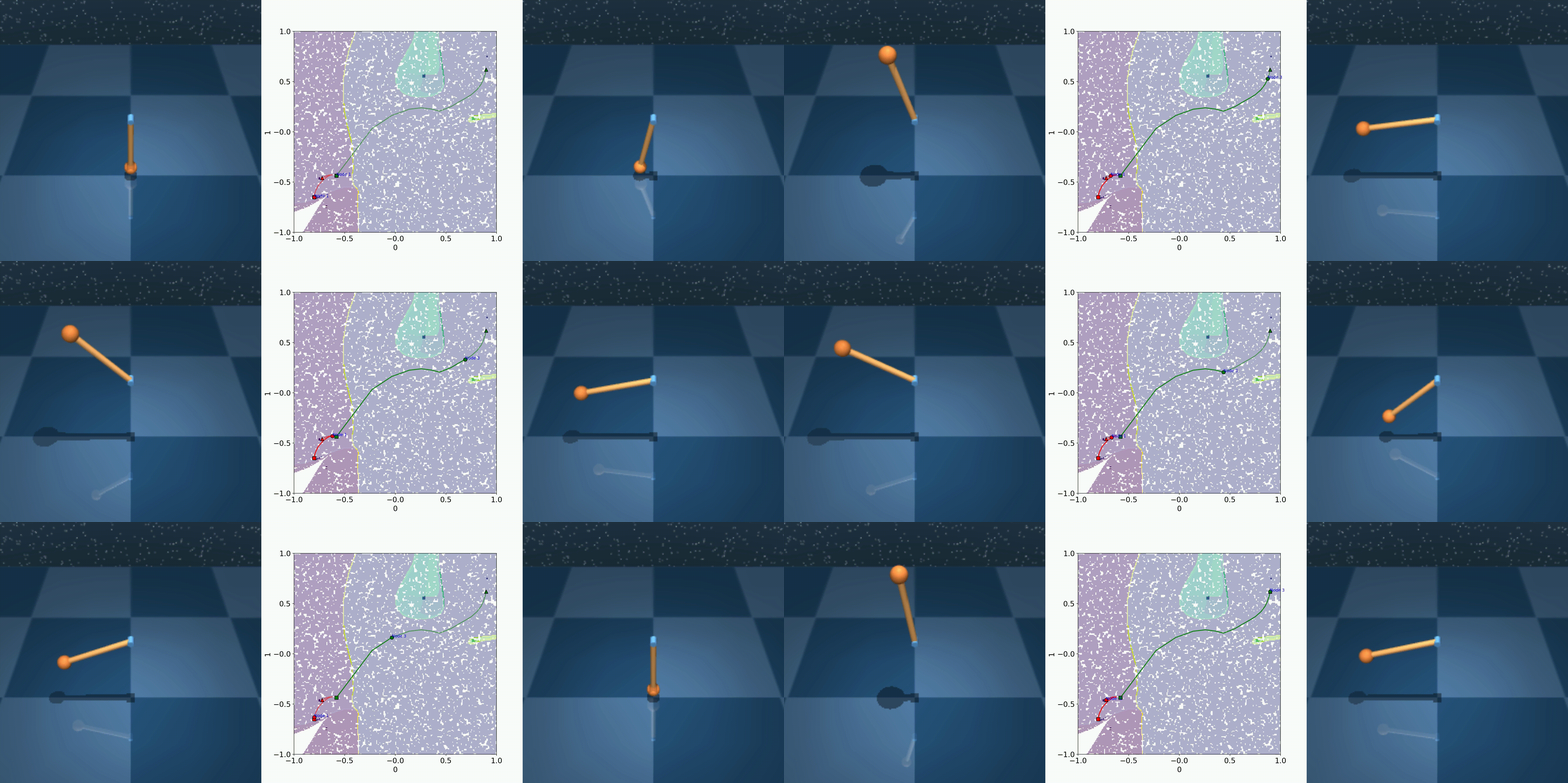
V-MORALS: Visual Morse Graph-Aided Estimation of Regions of Attraction in a Learned Latent Space
Faiz Aladin, Ashwin Balasubramanian, Lars Lindemann, Daniel Seita International Conference on Robotics and Automation (ICRA), 2026 Project Website / arXiv V-MORALS takes in a dataset of image-based trajectories of a system under a given controller, and defines a learned latent space for reachability analysis. Using the learned latent space, our method is able to generate well-defined Morse graphs and ROAs for various systems. |

|
Reasoning About Closed-Loop Failures of Vision-Based Controllers: A VLM-based Approach for Failure Analysis and Causal Reasoning with Limited Supervision
Kaustav Chakraborty, Faiz Aladin Code We propose a method to reason about closed-loop failures of vision-based controllers using vision-language models (VLMs). Our method enables end-to-end learning by generating training data from simulation and automating labeling for VLM finetuning. Our VLM is then able to predict failure modes and reason about the causes of failure. |
|
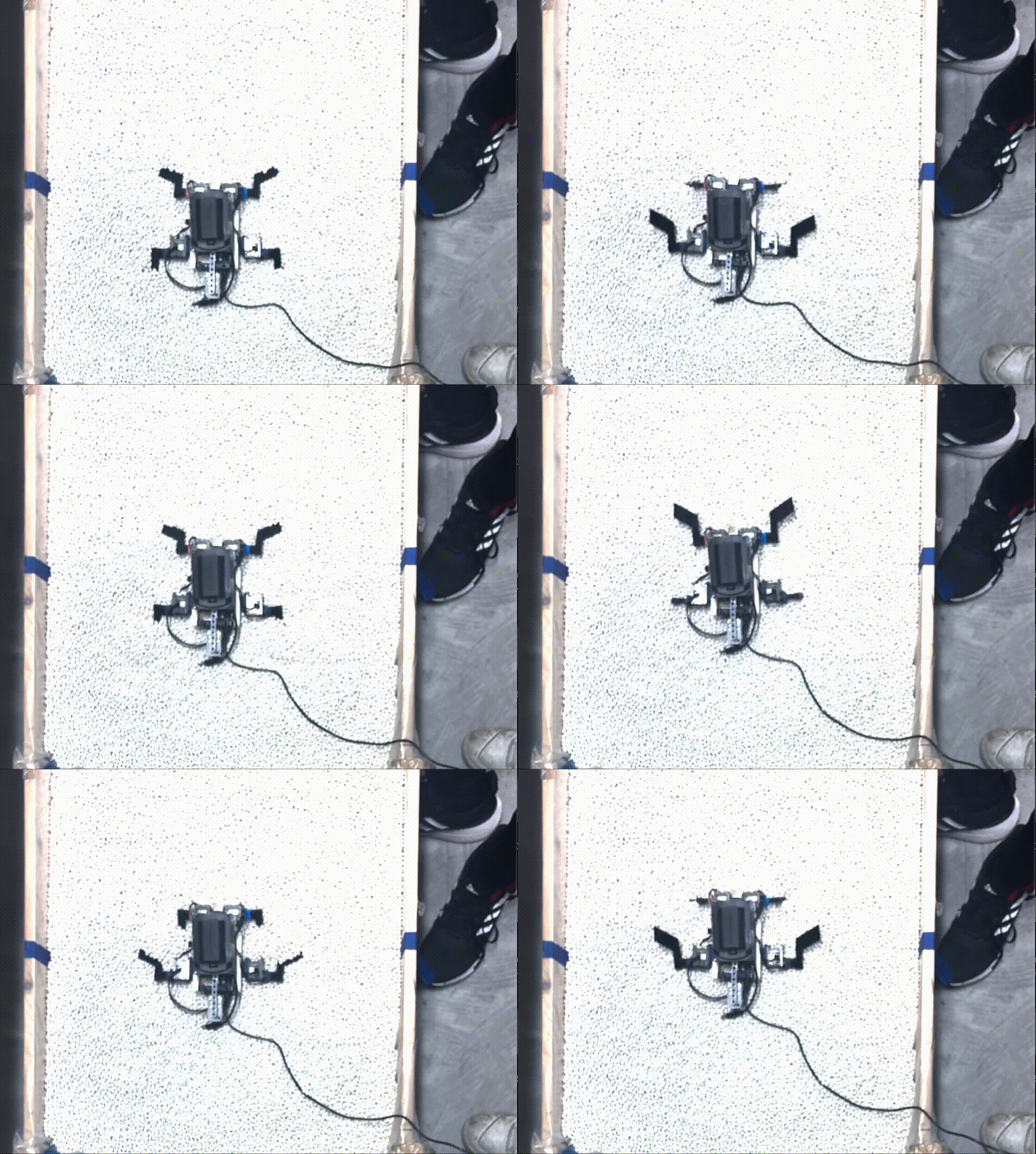
Leg-Flipper Hybrid Design for Enhancing Robot Locomotion on Granular Slopes
Faiz Aladin*, Jieming Deng*, Feng Xue* Paper Our method proposes a leg-flipper hybrid design to mitigate slippage and sinking on granular slopes by adjusting the flipper angle. To evaluate this, we tested the robot on an adjustable granular slope at inclines of 0, 10, 15, and 20 degrees. We designed five distinct toe attachments that maintained a constant submerged surface area to test different flipper angles. |
|
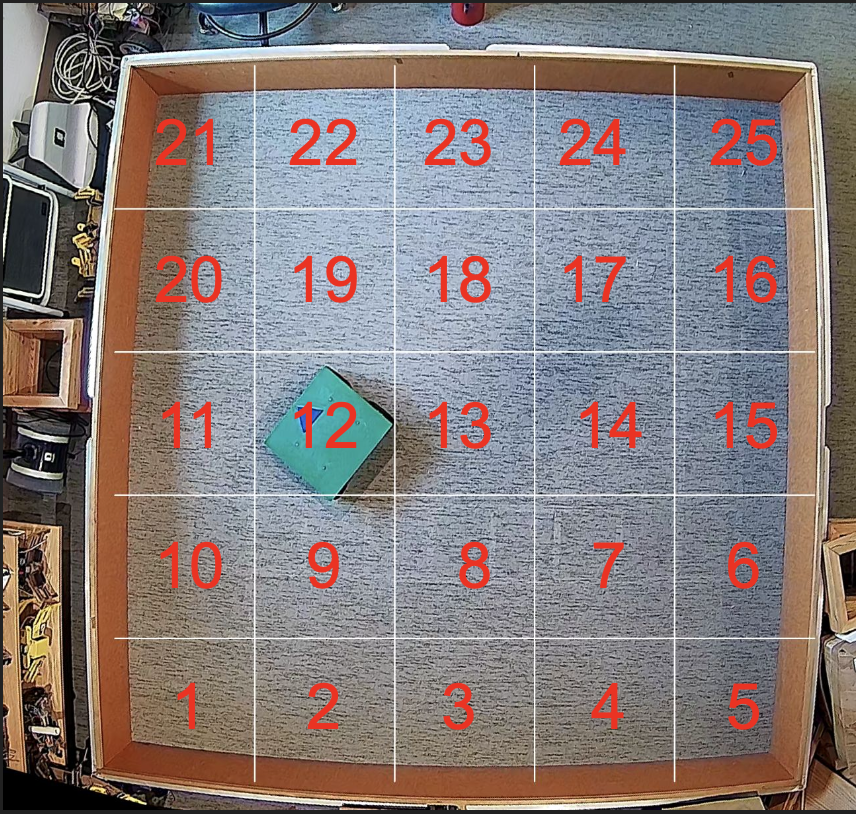
Bridging the Sim-To-Real Gap with Punctuated Anytime Learning and Evolutionary Computation in a Robot
Gary B. Parker, Jim O' Connor, Faiz Aladin Code We applied Punctuated Anytime Learning (PAL) and a Cyclic Genetic Algorithm (CGA) to teach a physical 4-wheeled robot to efficiently complete area coverage tasks. To overcome the reality gap while minimizing real-world training time, our system evolves control policies in an offline simulation and periodically evaluates the best solutions on the physical robot. |
Projects |
|
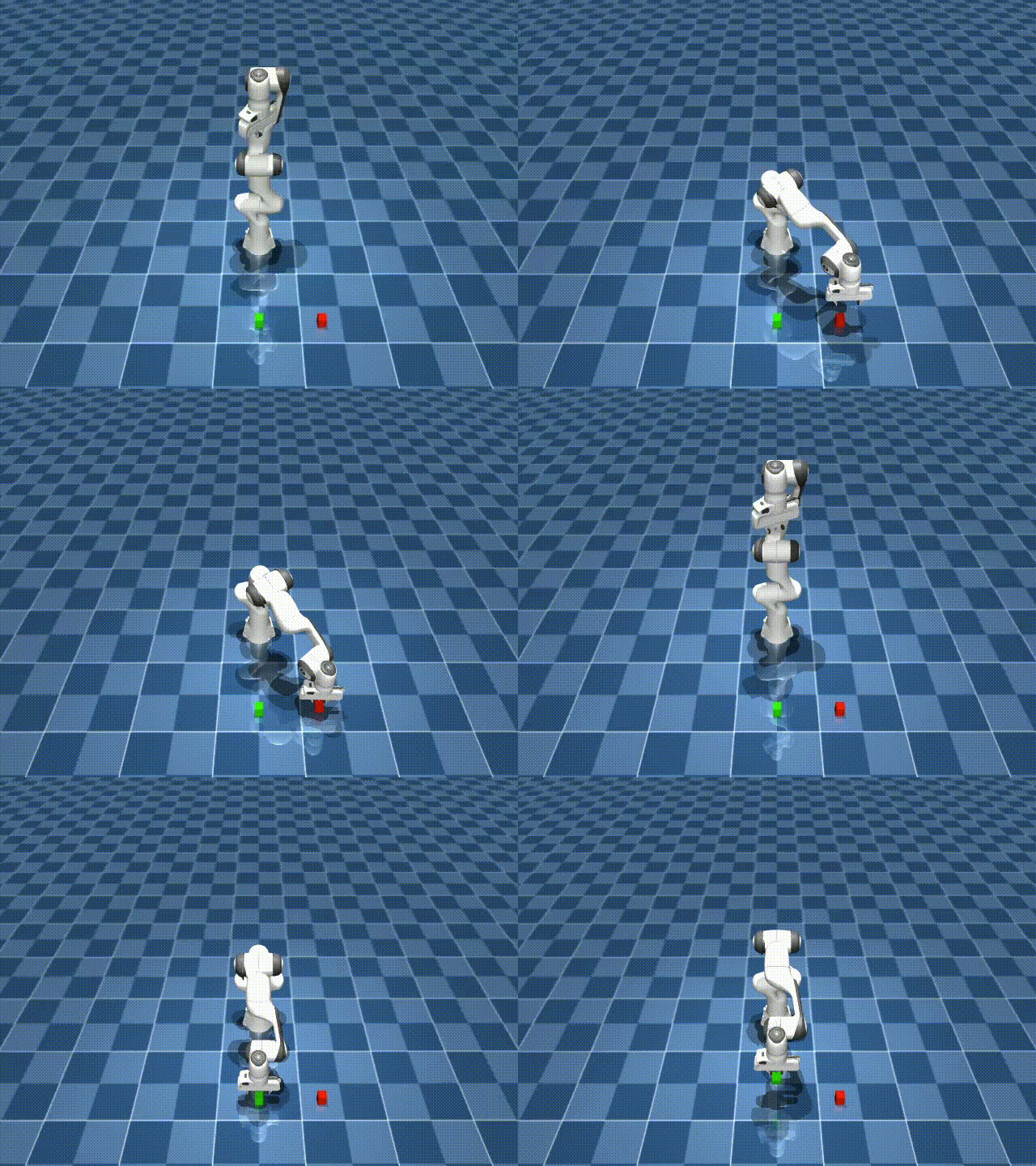
Pick and Place using state estimation from a 3D pointcloud and ROS2
Code This project implements a pick and place task using a Franka Emika Panda robot. We use ROS2 Jazzy to interface with the robot and MuJoCo for simulation. The system takes in a 3D pointcloud of the scene, estimates the state of the objects, and executes a pick and place operation. |
|
Inspired by the template here. |